Tiếng Việt
In critical civil and environmental containment systems—such as municipal landfills, industrial effluent treatment ponds, mining heap leach pads, and intensive aquaculture facilities—HDPE (High-Density Polyethylene) geomembranes serve as the primary containment barrier protecting surrounding ecosystems and groundwater tables.
As an established HDPE geomembrane manufacturer in Vietnam, An Thai Fiber frequently consults with international engineering contractors and global procurement teams who observe a substantial market price gap between 100% Virgin Resin HDPE Geomembranes and Recycled HDPE Liners.
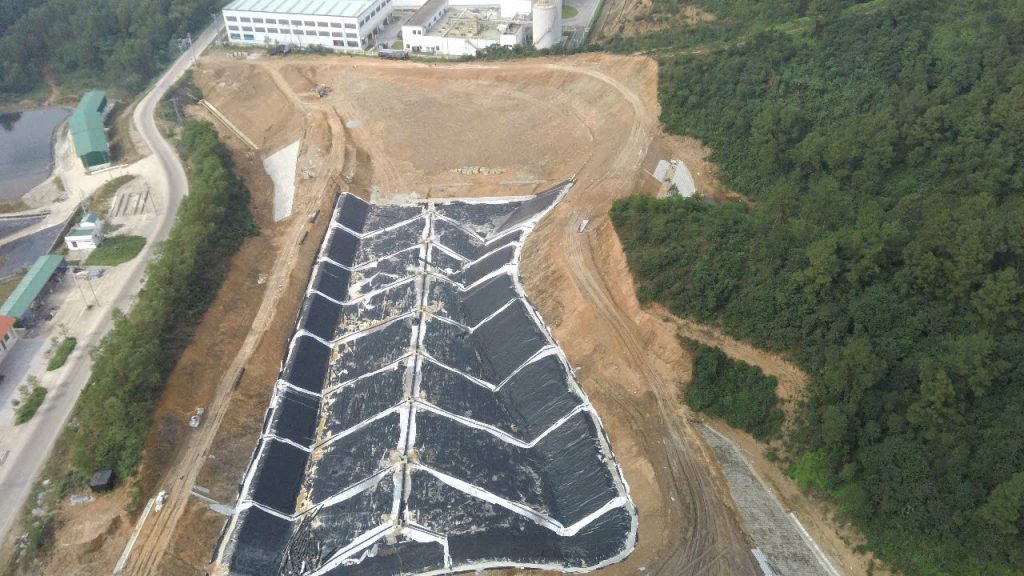
While lower initial material rates can seem attractive, does utilizing recycled resin genuinely offer cost savings, or does it risk catastrophic containment failure? Below is an engineering-grade technical analysis to guide your procurement decisions.
1. Molecular Structure & Raw Material Integrity
The mechanical longevity, chemical resistance, and tensile durability of an HDPE geomembrane depend directly on the purity and molecular weight distribution of its polymer chains:
100% Virgin HDPE Resin:
Synthesized directly from pure ethylene polymerization, preserving uncompromised high-density polymer chains without prior thermal history degradation.
Formulated strictly with 2.0% – 3.0% furnace-grade Carbon Black, high-performance thermal antioxidants, and Hindered Amine Light Stabilizers (HALS).
Visual & Structural Integrity: Natural resin pellets are translucent white and completely free from foreign contaminants. This structural purity guarantees optimal isotropic tensile elongation, exceptional environmental stress crack resistance (ESCR), and long-term UV stability under demanding field conditions.
Recycled HDPE Resin (Post-Consumer / Post-Industrial Waste):
Reclaimed from heterogeneous plastic scrap, discarded agricultural packaging, and regrind films.
Subjected to multiple thermal re-extrusion cycles and ambient weathering, the molecular chains suffer irreversible thermal degradation and chain scission.
Visual & Structural Integrity: Pellets appear dark grey, opaque black, or blotchy. They frequently contain micro-impurities (PP, LDPE, residual dust, and organic traces), generating internal micro-voids, early embrittlement, and rapid tearing under sustained tensile strain.
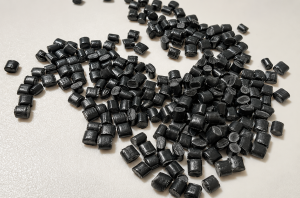
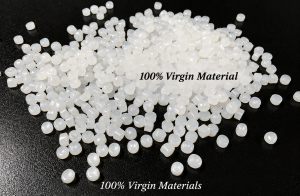
2. Technical Property Benchmark: 100% Virgin vs. Recycled HDPE Liner
| Technical Property | 100% Virgin HDPE Geomembrane (GRI-GM13 Standard) | Recycled HDPE Liner |
| Elongation at Break | >700% (ASTM D6693); accommodates substantial differential settlement and uneven subgrade movement. | Low (< 300–400%); rigid and brittle, prone to stress tears along subgrade irregularities. |
| Puncture & Tear Resistance | High localized puncture and multi-axial tear resistance; securely withstands angular gravel subgrades and hydraulic heads. | Inadequate; easily punctured under localized stress due to structural impurities and voids. |
| Thermal Seam Weldability | Consistent Melt Flow Index (MFI) guarantees homogeneous fusion via dual hot-wedge and extrusion welding; seam strength matches or exceeds base sheet. | Unstable MFI causes burned edges, gas blisters, and weak interfacial bonding, leading to high failure rates in pressurized air tests. |
| Environmental Stress Crack Resistance (ESCR) | > 400 – 500 hours (SP-NCTL per ASTM D5397); immune to brittle slow crack growth (SCG). | Substandard; rapid micro-cracking occurs within months under combined chemical exposure and tensile load. |
| UV Resistance & Photo-Oxidation | Uniformly dispersed furnace Carbon Black and antioxidant systems resist severe, long-term tropical UV radiation. | Inadequate additive stabilization leads to rapid photo-oxidation, surface chalking, crazing, and failure after one hot season. |
| Design Service Life (Exposed) | 15 to 30+ years (fully compliant with international GRI-GM13 standards). | 1 to 3 years (significant degradation and leakage risk within 6–12 months of sunlight exposure). |
3. The “Low-Cost Trap”: Evaluating the Total Cost of Ownership (TCO)
For overseas engineering firms sourcing materials from Southeast Asia, recycled liners may seem like a budget-saving option, often quoted 20% to 40% cheaper per square meter. However, evaluating the Total Cost of Ownership (TCO) reveals that using secondary materials is one of the highest financial risks in containment infrastructure:
The Real Cost Structure of Containment Engineering
The geomembrane sheet itself typically accounts for only 25% – 35% of the total installation budget. The remaining 65%–75% covers:
Site excavation, subgrade grading, compaction, and perimeter anchor trench construction.
Protective nonwoven geotextile cushions, leachate drainage, and gas collection systems.
Mobilization of certified hot-wedge welding crews, field machinery, and continuous CQA/destructive seam testing.
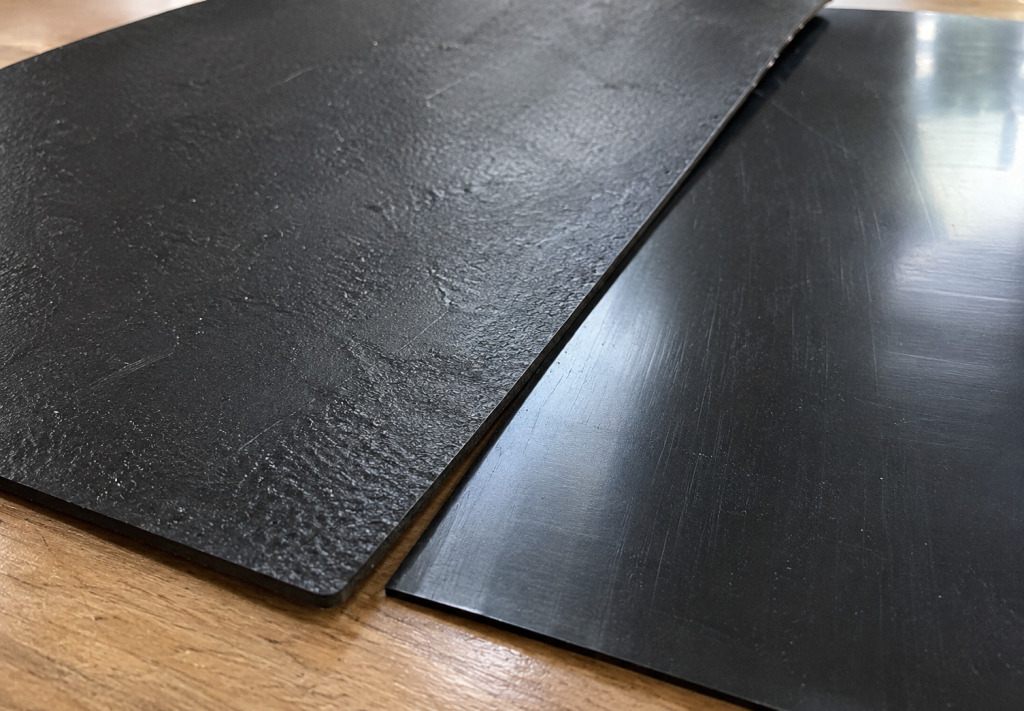
Choosing a substandard recycled liner risks the integrity of the entire project investment just to achieve marginal savings on material supply.
Engineering Principle: A containment geomembrane is installed at the lowest elevation of your project. Once submerged under wastewater or buried beneath municipal waste, post-failure maintenance is cost-prohibitive. Choosing certified virgin resin is not an added expense—it is the most economical risk-mitigation strategy for your project.
4. An Thai Fiber: Export-Grade HDPE Geomembrane Manufacturer in Vietnam
As a leading geosynthetics manufacturing ecosystem in Vietnam, An Thai produces export-quality HDPE geomembranes engineered strictly in accordance with GRI-GM13 standards:
Manufactured using 100% virgin HDPE resin sourced from the USA: Formulated exclusively from prime-grade polymer resins imported directly from top US petrochemical producers, guaranteeing consistent density, stable Melt Index, and zero regrind or post-consumer fillers.
Carefully selected additives for UV resistance and oxidation resistance: Compounded with high-surface-area furnace Carbon Black and synergistic antioxidant systems to maximize long-term Environmental Stress Crack Resistance under harsh tropical and sub-tropical conditions.
Designed not only to meet short-term mechanical requirements, but also to maintain long-term durability and containment performance: Engineered not merely to satisfy initial pre-shipment lab tests, but to ensure sustained chemical inertness and zero-leakage containment throughout the facility’s design life.
Direct Sourcing from Vietnam: Factory Pricing & Global Export Support
Are you looking for a qualified HDPE geomembrane manufacturer in Vietnam for your upcoming infrastructure, mining, or water treatment tenders?
Contact our international engineering and export sales department for physical samples, technical data sheets (TDS), and factory-direct quotations: WhatsApp +84 909 775 299 – Email: [email protected]